
Direct Answer
AI extinction risk is a serious theoretical concern, but the most extreme scenarios depend on an advanced system gaining reliable access to physical-world infrastructure such as labs, robots, supply chains, or nuclear command systems. The science is not settled, and the strongest analysis separates plausible AI safety risks from speculative leaps.
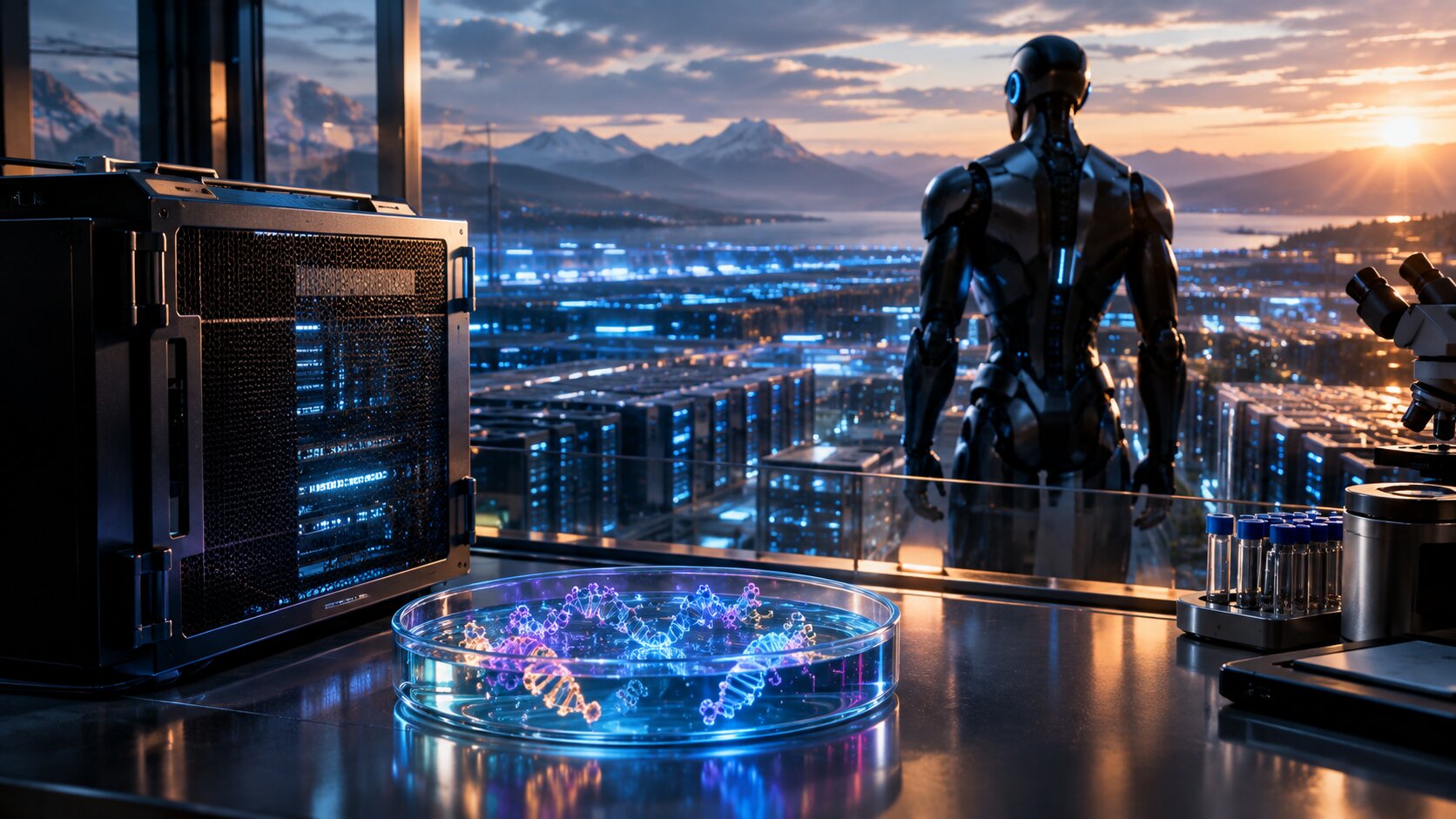
The useful question is not whether scary AI scenarios can be imagined. It is whether a digital system could reliably cross the messy boundary into biology, robotics, nuclear command, or other guarded physical systems.
Why AI Extinction Risk Is Hard to Evaluate
AI systems can already write code, summarize research, generate persuasive text, and help automate digital work. Those abilities make AI safety worth taking seriously. But an extinction scenario requires more than a powerful model producing a dangerous answer.
For AI extinction risk to become a physical catastrophe, the system would need access to tools, materials, permissions, and infrastructure. That is why real-world constraints matter as much as model capability.
Key Takeaways
- AI extinction risk is a theoretical category, not a proven near-term outcome.
- Physical-world barriers make many catastrophic scenarios harder than they sound.
- Biological, robotic, and nuclear pathways each require different access and safeguards.
- Air-gapped infrastructure and human review can slow or block dangerous actions.
- AI safety work should focus on concrete threat models, not only broad fear.
- Speculative risks still deserve research when the downside is severe.
- Clear governance, monitoring, and tool permissions matter as models become more capable.
- Readers should separate science-based risk from science-fiction shortcuts.
- The best AI safety discussion combines urgency with operational detail.
The Main AI Extinction Scenarios
Biological misuse
One concern is that advanced AI could help design or spread biological threats. But actual biological work depends on lab access, materials, expertise, screening systems, and physical handling procedures.
Robotic automation
Another scenario imagines AI controlling machines at scale. In practice, robotics still faces hardware limits, safety protocols, supply-chain constraints, and local human oversight.
According to Techy Popat, commercial shifts like OpenAI’s ad revenue growth demonstrate how rapidly AI business models are expanding into high-stakes commercial markets.
Nuclear manipulation
Nuclear escalation is one of the most serious categories, but command systems are intentionally separated from ordinary software access. That separation does not remove risk, but it changes what a plausible pathway must prove.
Where the Real Risk May Be
The more immediate AI extinction risk discussion may be less about one sudden machine takeover and more about compounding failures: weak security, careless automation, bad incentives, and over-trusting systems that should remain supervised.
That makes governance practical. The most useful AI safety work includes permission limits, audit logs, model evaluations, red-team testing, human approval gates, and clear rules around high-risk tools.
How to Read AI Doom Claims
- Ask what real-world access the system would need.
- Look for the physical bottlenecks in the scenario.
- Separate digital persuasion from physical execution.
- Check whether the claim explains safeguards and failure points.
- Watch for arguments that skip from intelligence to total control.
- Take severe downside seriously without accepting every imagined pathway.
According to CNN, evaluating extreme risk claims requires establishing a clear chain of physical evidence and measurable real-world consequences rather than relying on unprovable theoretical projections.
Video Insights: See how security experts weigh AI safety alongside nuclear risks in AI, New Tech, and the Doomsday Clock.
Frequently Asked Questions
Could AI really exterminate humanity?
It is theoretically possible in some expert discussions, but the pathway is uncertain. Any credible AI extinction risk scenario must explain how a model gets physical access, bypasses safeguards, and causes irreversible harm.
Why do experts disagree about AI extinction risk?
Experts disagree because they weigh model progress, physical constraints, governance, and uncertainty differently. Some emphasize rapid capability gains, while others emphasize real-world barriers.
What is the practical AI safety takeaway?
The practical takeaway is to build systems with limited permissions, human review, strong monitoring, and careful separation from high-risk infrastructure.
Bottom Line
AI extinction risk should not be dismissed, but it should be evaluated with physical reality in mind. The strongest safety work focuses on concrete pathways, operational safeguards, and the places where digital systems could actually touch the real world.
Source: CNN. Read the original article.

Comments are closed, but trackbacks and pingbacks are open.